
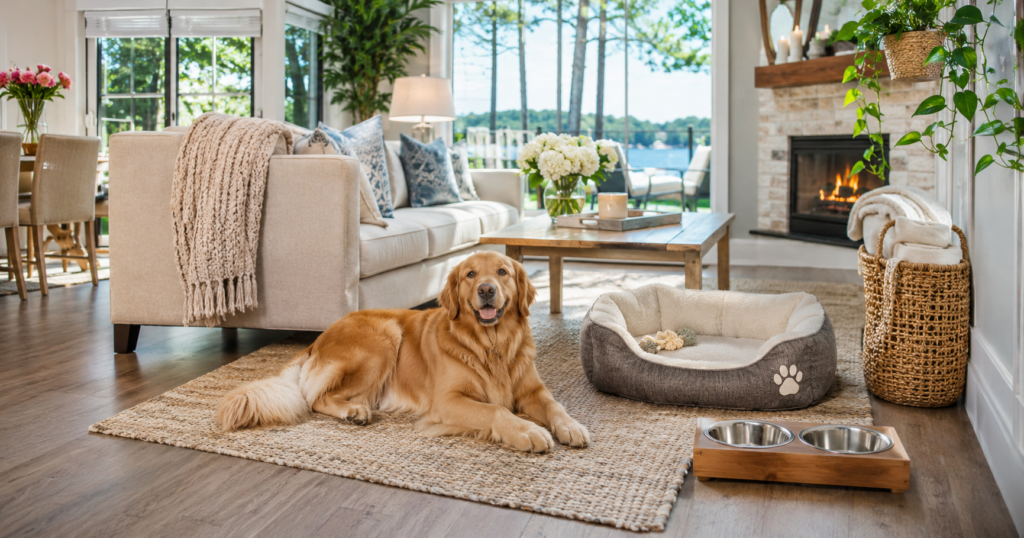
Should You Allow Pets in Your Airbnb?
By Short Term Stay Pros | Vacation Rental Management & Airbnb Co-Hosting
Should you allow dogs and cats in your Airbnb or vacation rental? For many short-term rental owners, welcoming pets can be a smart business decision. It can expand your potential guest pool, make your property more appealing to travelers with animals, and create opportunities for memorable guest experiences.
However, accepting pets also introduces additional responsibilities, cleaning requirements, potential property damage, and safety considerations.
At Short Term Stay Pros, we’ve spent years welcoming guests into short-term rentals, including properties that accommodate dogs. We’ve learned that being pet-friendly requires much more than checking the “Pets Allowed” box on Airbnb.
It requires thoughtful policies, clear communication, a consistent screening process, and an understanding that not every animal is a good match for every property.
Whether you’re managing a private room in your home, a furnished apartment, or an entire vacation rental, this guide will help you decide whether to accept pets and how to do it successfully.
The Benefits of Allowing Pets in Your Airbnb
Travelers who consider their dogs or cats part of the family often prefer accommodations where their pets are welcome.
For Airbnb owners, a thoughtful pet policy can offer several advantages.
1. Attract More Potential Guests
Allowing pets opens your listing to travelers who specifically search for pet-friendly accommodations.
Families vacationing with dogs, traveling professionals on extended assignments, and guests relocating between homes may prioritize properties that allow animals.
When guests filter Airbnb results for pet-friendly properties, listings that don’t accommodate pets may be excluded from consideration.
2. Create a Competitive Advantage
If many comparable rentals in your market prohibit pets, accepting them can help differentiate your property.
Features like a fenced yard, convenient outdoor access, durable flooring, and nearby walking trails can make your listing especially appealing.
3. Potentially Increase Revenue
Pet-friendly properties may generate additional booking opportunities and revenue through appropriately structured pet fees.
However, more bookings do not automatically mean more profit.
Owners should evaluate their actual cleaning costs, maintenance expenses, insurance coverage, and potential damage before determining whether accepting pets makes financial sense.
4. Encourage Longer Stays
Travelers relocating for work, waiting for a home purchase to close, or accepting temporary assignments may find it difficult to secure furnished accommodations that accept their pets.
A well-equipped pet-friendly rental may be particularly attractive to these guests, potentially helping fill longer gaps in your booking calendar.
5. Deliver a More Welcoming Guest Experience
Thoughtful pet-friendly amenities can make guests feel that their entire family is welcome.
A comfortable pet bed, food and water bowls, and a few practical supplies can turn an ordinary stay into a memorable experience.
These small touches may also encourage positive reviews and repeat visits.
The Drawbacks and Risks of Accepting Pets
Before changing your Airbnb pet policy, consider the potential disadvantages.
Additional cleaning: Pet hair, muddy paws, odors, and accidents can increase turnover time. Upholstery, bedding, carpets, and floors may require extra attention.
Potential damage: Even otherwise well-trained animals can scratch doors, chew furniture, damage screens, or have accidents in unfamiliar environments.
Noise complaints: Dogs experiencing separation anxiety may bark, whine, or scratch at doors when left alone. This can disturb neighbors and other guests.
Allergen concerns: Pet dander can remain in upholstered furniture, rugs, and other soft surfaces despite routine cleaning, making the property less attractive to guests with allergies.
Safety and liability: Dogs that react aggressively to unfamiliar people or animals may pose risks to other guests, neighbors, cleaners, or resident pets.
Additional wear and tear: Frequent stays involving animals may contribute to faster deterioration of flooring, landscaping, furniture, and outdoor spaces.
The goal isn’t to eliminate every possible risk. It’s to establish reasonable safeguards that protect your property, your guests, and the animals themselves.
How to Screen Airbnb Guests Traveling With Pets
One of the most important components of successful pet-friendly hosting is communicating with guests before confirming that a particular pet arrangement is suitable.
A guest who says, “My dogs are wonderful,” may genuinely believe that. But every property has different circumstances, and a dog’s behavior in its own home may differ considerably from its behavior in an unfamiliar environment.
At Short Term Stay Pros, we recommend asking the following questions whenever guests inquire about bringing pets, while applying a consistent, lawful screening process.
10 Questions to Ask Before Accepting a Guest With Dogs
- How many dogs will be traveling with you? Confirm that the number matches the reservation.
- What breeds or mixes are your dogs, and approximately how large are they? This helps establish suitability for your property’s layout and any lawful insurance or occupancy restrictions. Focus on individual behavior rather than assuming temperament from breed.
- How old are your dogs? Puppies may have different supervision and house-training needs than mature dogs.
- Are your dogs fully house-trained? Ask whether they have a history of indoor accidents.
- How do they behave around unfamiliar people? Consider interactions with cleaners, maintenance personnel, neighbors, and other guests.
- How do they react to other dogs? This is especially important in shared homes, multi-unit properties, and rentals with resident pets.
- Are they accustomed to traveling and staying in unfamiliar homes? Animals that travel regularly may adapt more easily to a new environment.
- Will the dogs be left alone at the property? If unattended pets are permitted, ask how they typically behave when separated from their owners.
- Are your dogs comfortable using a crate or kennel? If your property permits temporary unsupervised stays, a familiar crate may help some dogs feel secure. Crating should never replace appropriate supervision or be used with dogs that panic when confined.
- Have you reviewed and agreed to our pet policies? Confirm the rules before booking so expectations are clear.
These questions should be part of a documented, consistent process for ordinary pets. Service animals and certain emotional support animals are subject to separate accessibility requirements, discussed later in this article.
Why Temperament Matters More Than Appearance
A large, calm, well-trained dog may be better suited to a vacation rental than a small dog that barks continuously, chews furniture, or reacts aggressively to other animals.
A property’s suitability also depends on the environment.
For example, a dog that becomes anxious around other dogs may do perfectly well in a private, detached vacation home with no resident animals.
That same dog may not be a suitable match for an owner-occupied Airbnb where other dogs live in the house.
The right question isn’t simply, “Is this dog friendly?” It’s, “Is this particular property a safe, appropriate environment for this animal?”
Should Airbnb Guests Be Allowed to Leave Dogs Alone?
This is one of the most important decisions pet-friendly Airbnb hosts need to make.
Imagine accepting a reservation from guests who bring two dogs to your property. The guests plan to attend a concert or spend several hours sightseeing, leaving the dogs behind.
They assure you that their pets are well-behaved and won’t damage anything.
But what happens when the guests leave?
Some dogs settle comfortably into their familiar routine. Others become distressed, bark repeatedly, scratch doors, or attempt to escape.
Unfamiliar surroundings, new smells, and separation from their owners can contribute to anxiety, even in dogs that behave well at home.
Consider a No-Unattended-Pets Policy
For many hosts, particularly those renting private rooms or operating shared accommodations, requiring guests to remain with their pets is the simplest approach.
An example policy might read:
“Pets may not be left unattended at the property. Guests must arrange appropriate off-site pet care whenever their plans require them to leave without their animals.”
Other hosts may permit unattended pets under clearly defined conditions, especially in whole-home rentals.
If you choose that approach, consider requiring guests to confirm that their dogs are comfortable being left alone, specifying any permitted crate requirements, and establishing an emergency contact procedure.
A crate can be a helpful amenity, but it is not a substitute for training, responsible supervision, or appropriate pet care.
Hosts should also avoid assuming that calming supplements or medications guarantee safe behavior. Guests should make treatment decisions with their veterinarians, not as a workaround for unsuitable lodging arrangements.
Shared Homes Require Additional Precautions
Renting a private room in your own home is very different from renting an entire house.
If you have resident dogs, unfamiliar animals can create tension even when the guest’s pets remain behind a closed door.
Dogs have an extraordinary sense of smell. They may detect unfamiliar animals elsewhere in the home, creating barking, heightened alertness, or other stress-related behavior.
For owner-occupied properties, consider whether visiting dogs can safely interact with resident pets, whether complete separation is practical, and whether noise could disrupt the household.
Protecting the safety and comfort of resident animals is a legitimate hosting consideration, subject to applicable accessibility and anti-discrimination requirements.
Should You Allow Cats in Your Airbnb?
Dogs are often the first animals owners consider when establishing pet-friendly vacation rentals.
But what about cats?
Accepting cats may help attract travelers relocating for work, moving between homes, or seeking extended furnished accommodations.
However, cats introduce some different property management considerations.
Benefits of Accepting Cats
- Cats generally don’t require outdoor bathroom breaks.
- Some cats are quiet and adapt well to familiar indoor routines.
- Cat-friendly furnished rentals may appeal to guests seeking longer stays.
- Owners may face less competition from comparable rentals that don’t accept cats.
Drawbacks of Accepting Cats
Scratching damage: Cats may scratch upholstery, curtains, carpets, and door frames.
Litter box management: Improperly maintained litter boxes can cause odors and sanitation problems. Scattered litter can also create additional cleaning.
Urine odors: Cat urine can be especially difficult to remove from porous surfaces and may require specialized cleaning or replacement of affected materials.
Allergen concerns: Cat allergens can persist in a property, especially in soft furnishings.
Escape risks: Cats may hide in furniture, slip through open doors, or escape through damaged window screens.
Interactions with resident animals: Shared homes with dogs may not provide a suitable environment for visiting cats.
When Accepting Cats Makes Sense
A detached property with durable flooring, minimal upholstered furniture, secure windows, and space for a litter box may be a good candidate.
A furnished apartment designed for extended stays may also be appropriate, provided the property can safely accommodate the animal.
On the other hand, hosts with expensive upholstery, resident pets, delicate furnishings, or shared accommodations may decide that cats are not an appropriate fit.
If you accept cats, establish clear rules for litter disposal, scratching protection, cleaning, and preventing escapes.
Our recommendation: Evaluate cats separately from dogs when developing your ordinary pet policy. A property can be dog-friendly without necessarily being suitable for cats, subject to applicable assistance-animal requirements.
How Much Should You Charge for Pets on Airbnb?
Pet fees help owners recover the additional cleaning expenses expected when accommodating animals.
Airbnb currently allows hosts to structure pet fees in several ways, including a flat fee per reservation, per night, per pet, or per pet per night.
Airbnb also limits the pet fee to the listing’s nightly base rate and displays applicable fees as part of the guest’s booking price.
For current details, review Airbnb’s official pet fee guidance.
What Should Your Pet Fee Cover?
Consider the routine additional work involved in hosting pets:
- Removing pet hair from furniture and flooring
- Washing designated pet blankets or furniture covers
- Cleaning nose prints from windows and glass doors
- Removing ordinary paw prints
- Performing additional vacuuming and deodorizing when necessary
Pet fees are intended for expected cleaning, not as a substitute for reimbursement when an animal causes unexpected damage.
Avoid treating a pet fee as automatic additional profit without considering what your cleaning team actually charges.
What About Pet Damage?
Airbnb’s AirCover for Hosts includes Host Damage Protection that may apply to eligible pet-related damage, subject to its terms, limitations, and exclusions.
It is not a replacement for adequate short-term rental insurance.
Review your policy with an insurance professional to understand whether guest-related pet injuries, property damage, and liability are covered.
You should also document the condition of your rental between stays, especially when pets have been present.
Pet-Friendly Airbnb Amenities That Can Make Your Listing Stand Out
You don’t need to spend a fortune to create an excellent experience for guests traveling with pets.
Consider providing a small collection of practical amenities that demonstrate thoughtful hospitality.
Essential Pet-Friendly Amenities
Food and water bowls: Washable stainless-steel bowls are durable and easy to sanitize.
Dog beds: A washable dog bed gives visiting pets a comfortable place to rest and may discourage them from climbing onto upholstered furniture.
Pet waste bags: Keep a supply near the entrance and provide an appropriate outdoor disposal location.
Paw-cleaning towels: Designate towels specifically for wiping muddy paws after walks.
Furniture covers: Washable covers can help protect couches and chairs if your policy allows pets on furniture.
Pet-safe cleaning supplies: Provide supplies suitable for minor accidents while leaving professional cleaning tasks to your housekeeping team.
Extra Touches Guests May Appreciate
Dog biscuits or treats: A small welcome treat can make a wonderful impression. Choose commercially packaged treats and check with guests before offering anything their pets may have dietary restrictions against.
A portable dog crate: Consider providing one for guests whose dogs are already crate-trained. Specify the size and ensure it is clean and in good condition.
A dog-friendly welcome basket: Include waste bags, a towel, a toy, and information about nearby pet services.
A pet information guide: List nearby walking trails, dog parks, veterinarians, emergency animal hospitals, pet supply stores, and reputable pet-sitting or boarding facilities.
An outdoor rinsing area: A hose or designated paw-washing station is especially useful at lakefront, beach, and hiking destinations.
A securely fenced yard: This can be a valuable feature, but accurately describe the fence’s height, construction, gates, and limitations. Never advertise a yard as fully enclosed unless it truly is.
If You Accept Cats
Consider offering a washable litter mat, a designated litter box location, secure screened windows, and a scratching surface.
Avoid leaving toxic plants or hazardous cleaning products where visiting cats can reach them.
Creating Clear Airbnb Pet House Rules
A successful pet-friendly Airbnb starts with expectations that are established before guests book.
Your listing should explain your standard pet policy, including permitted animal types, the number of pets allowed, any applicable fees, and supervision expectations.
Sample Pet Rules for Vacation Rentals
Property owners can adapt the following language to their particular accommodations:
Pet-Friendly House Rules
We welcome responsible pet owners and well-behaved, house-trained dogs, subject to the property guidelines outlined below.
- Guests must include all ordinary pets in their reservation and confirm that the property’s pet policy is appropriate for their animals.
- Dogs must be house-trained and appropriately supervised.
- Pets must be leashed in outdoor areas unless they are within a secure, designated off-leash space.
- Pets are not permitted on beds or furniture unless specifically allowed in the listing.
- Guests are responsible for promptly picking up and properly disposing of pet waste.
- Pets must not create excessive noise or disturbances.
- Pets may not be left unattended unless the listing expressly permits it under stated conditions.
- Guests are responsible for damage caused by their pets, subject to applicable platform policies and laws.
- Guests must comply with all applicable local animal control and leash requirements.
Important: These are examples for ordinary pets. Review Airbnb’s accessibility requirements before applying restrictions to service animals or qualifying emotional support animals.
Also, make sure your pet restrictions are properly disclosed in the listing’s designated house rules section before booking. Airbnb’s updated Reasonable House Rules Policy applies to reservations booked on or after November 20, 2026.
A Simple Pet-Screening Process for Airbnb Hosts
Developing a consistent process helps hosts avoid confusion, last-minute surprises, and unnecessary disputes.
Step 1: Establish Your Property’s Pet Policy
Before accepting reservations, decide which ordinary pets are allowed, how many you can accommodate, what additional cleaning is necessary, and whether animals can be left unattended.
Review your insurance policy, condominium or HOA rules, local requirements, and Airbnb policies.
Step 2: Communicate Before Booking
Invite guests traveling with ordinary pets to review your listing’s rules and provide relevant information about their animals.
For example:
“Thank you for your interest in our property! We’re happy to consider guests traveling with dogs. Could you please share their breeds or mixes, approximate sizes, ages, and temperaments? We’d also like to know how they behave around unfamiliar people and animals and whether they’ll accompany you during your activities. This helps us confirm that our property is a comfortable fit for everyone.”
Step 3: Evaluate the Property Fit
Consider the information provided in relation to the property itself.
A dog that isn’t comfortable around other animals may be better suited to a detached home than a shared property with resident dogs.
Avoid arbitrary assumptions based on breed or size alone. Apply your ordinary pet policies consistently and in accordance with applicable laws.
Step 4: Confirm the Rules in Writing
Before finalizing the reservation, make sure guests understand the pet policy already disclosed in your Airbnb listing, including supervision requirements, permitted areas, and applicable fees.
Keep important communication within Airbnb’s messaging system.
Step 5: Prepare the Property
Before arrival, check gates and fences, remove animal hazards, prepare the pet amenities you’ve advertised, and inform your cleaning team that pets will be staying.
Step 6: Inspect and Clean After Checkout
Follow a consistent turnover process:
- Check for pet hair, stains, and odors.
- Inspect furniture, doors, screens, and flooring.
- Examine outdoor areas for pet waste.
- Wash and sanitize reusable pet amenities.
- Document any unexpected damage promptly.
- Complete the appropriate Airbnb reimbursement process when necessary.
Your cleaners are an important part of maintaining a successful pet-friendly rental. Provide clear procedures and adequate time for them to complete the work.
Important: Airbnb Service Animals and Emotional Support Animals
Pet-friendly hosting rules are not the same as Airbnb’s rules for assistance animals.
Under Airbnb’s Accessibility Policy, service animals are not treated as ordinary pets.
Hosts generally must accommodate service animals, including at listings that do not otherwise permit pets, except in limited circumstances recognized by Airbnb’s policy and applicable law.
Hosts cannot charge pet fees for service animals or impose special pet-related treatment that violates Airbnb’s accessibility requirements.
Emotional support animals have different protections depending on the jurisdiction. Airbnb requires qualifying emotional support animals to be accommodated in certain locations, including New York and California for home reservations, as well as where applicable law requires accommodation.
Hosts should not assume that ordinary pet screening questions, fees, restrictions, or unattended-animal rules automatically apply to assistance animals.
Review Airbnb’s current Accessibility Policy and applicable laws before taking action involving an assistance animal. When a legitimate health or safety concern arises, contact Airbnb for guidance rather than making assumptions about a guest’s disability or animal.
How to Market Your Pet-Friendly Airbnb
Once you’ve established an appropriate pet policy and prepared your property, make sure prospective guests know what you offer.
Use Pet-Friendly Keywords Naturally
Include relevant descriptions in your Airbnb listing, direct-booking website, and other marketing materials where accurate.
Examples include:
- Pet-friendly vacation rental
- Dog-friendly Airbnb
- Vacation home with fenced yard
- Furnished rental that allows dogs
- Pet-friendly short-term rental
- Dog-friendly monthly rental
For independently marketed properties, consider geographic keyword phrases such as “dog-friendly vacation rental in Connecticut” or “pet-friendly furnished rental in Eastern Connecticut,” as long as they accurately describe the property.
Showcase the Amenities in Your Photos
Photograph dog beds, pet bowls, securely fenced outdoor spaces, walking areas, and other meaningful amenities.
Captions can help guests understand exactly what is included.
Be Specific About Restrictions
Don’t simply write “Pets Welcome!” if your property has important limitations.
Clearly explain what kinds of ordinary pets are permitted and any relevant property restrictions.
Accuracy attracts better-suited guests and prevents misunderstandings.
Frequently Asked Questions About Pet-Friendly Airbnbs
Is it worth allowing pets in an Airbnb?
It can be. Accepting pets may broaden your potential guest market, improve your listing’s appeal, and create additional booking opportunities. However, owners should evaluate cleaning costs, potential damage, insurance, and the suitability of their property before deciding.
Can Airbnb hosts charge extra for pets?
Yes. Airbnb permits applicable pet fees for ordinary pets, subject to its pricing rules. Hosts generally cannot charge pet fees for service animals, and restrictions also apply to certain emotional support animals.
Can I allow dogs but not cats?
Generally, hosts can establish which ordinary pets their property accommodates, subject to Airbnb policies, applicable laws, and assistance-animal protections.
Should dogs be allowed to stay alone in an Airbnb?
That depends on the property and its disclosed rules. Some whole-home rentals permit unattended dogs under certain conditions. Other properties, especially shared homes, may prohibit leaving ordinary pets alone.
Should Airbnb hosts provide dog crates?
A clean, appropriately sized dog crate can be a useful optional amenity for guests with crate-trained dogs. It should never be used as a substitute for proper supervision or to confine an animal that becomes distressed in a crate.
How can hosts prevent pet damage?
Use durable materials, washable furniture covers, clear pet rules, consistent guest communication, and a thorough cleaning and inspection process. No screening system completely eliminates the risk of damage, so appropriate insurance and documentation remain important.
Pet-Friendly Hosting Should Be Good for Everyone
At Short Term Stay Pros, we believe that welcoming guests and protecting a property should go hand in hand.
Allowing pets can be a wonderful way to expand your guest market and offer a more inclusive vacation rental experience.
But being pet-friendly doesn’t mean every animal is the right fit for every property.
A well-trained dog traveling with a responsible owner may be an excellent guest. A dog that struggles with unfamiliar environments, becomes distressed when separated, or reacts poorly to resident pets may need a different type of accommodation.
The goal is to create a safe, comfortable, and enjoyable experience for guests, their animals, neighboring residents, and property owners alike.
With thoughtful policies, consistent screening, appropriate amenities, and professional management, a pet-friendly Airbnb can become a valuable part of your short-term rental business.
Need Help Managing Your Pet-Friendly Vacation Rental?
Short Term Stay Pros helps property owners navigate the many responsibilities of successful short-term rental hosting, from guest communication and listing optimization to cleaning coordination, house rules, and property management.
Whether you’re deciding if your property should accept pets, looking to improve your guest screening process, or seeking professional co-hosting assistance, we’re here to help you make informed decisions.
Contact Short Term Stay Pros to learn how professional Airbnb co-hosting and vacation rental management can help protect your property while creating exceptional guest experiences.