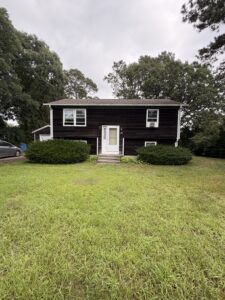
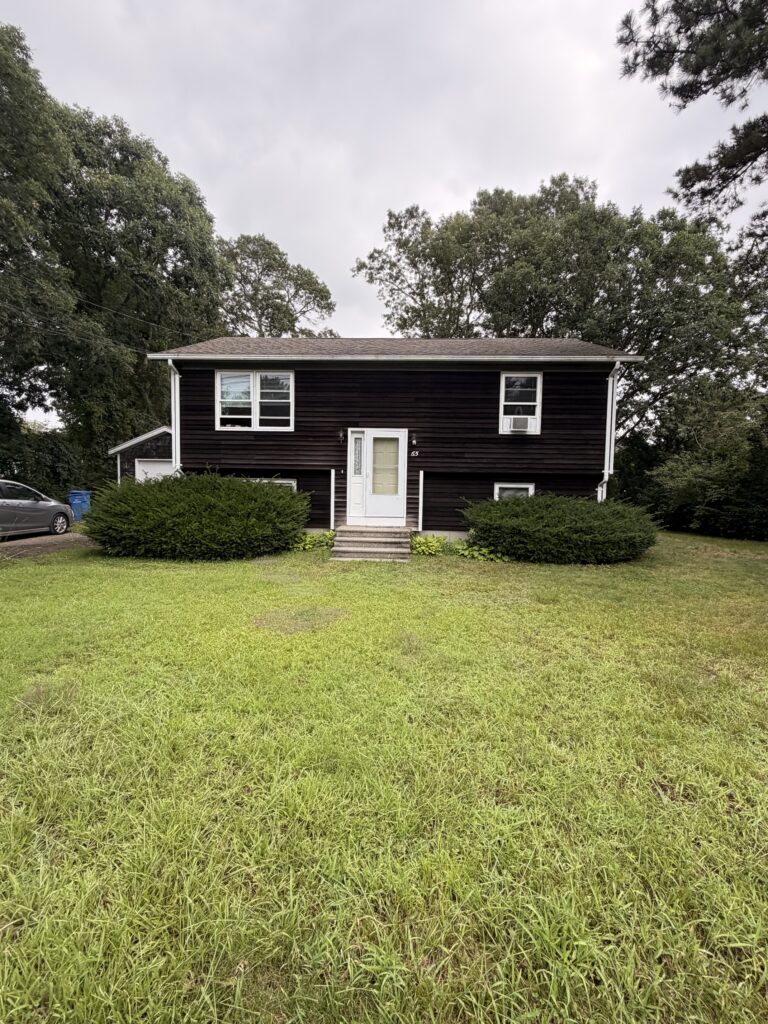
When a property owner contacts me about helping turn a house into a short-term rental, one of the first things I look at is potential.
Where is it located?
Who is traveling to the area?
What could the property reasonably rent for?
What makes it different from competing rentals?
And, perhaps most importantly, can this property deliver the kind of guest experience that will earn strong reviews and repeat bookings?
Recently, I was contacted about a house in a very desirable coastal vacation market.
I am intentionally not identifying the homeowner or the property’s exact location. This isn’t about criticizing one particular owner or house.
It’s about sharing what happens behind the scenes when a property manager evaluates a potential Airbnb or vacation rental and has to decide:
Is this an opportunity I want to take on?
Initially, I thought the answer might be yes.
By the time I left the property, I knew the answer was much more complicated.
Before I Ever Visited the Property, I Saw Potential
The location immediately caught my attention.
This is an area where people already want to vacation. There is existing tourism demand, seasonal traffic, and the type of location that can command strong short-term rental rates when the property and guest experience are right.
So before visiting, I started looking at the opportunity the way I would any prospective short-term rental property.
I considered the area’s demand, competing rentals, likely guest profile, property size, sleeping capacity, and what a well-positioned home in that market might reasonably generate.
On paper, there was opportunity.
That is why I agreed to go see it.
But one lesson I have learned repeatedly in property management is this:
You cannot evaluate a short-term rental from its location alone.
Revenue projections tell me what a property could potentially earn.
Walking through the front door tells me whether the property is realistically positioned to earn it.
Then I Pulled Into the Driveway
When I arrive at a potential short-term rental, I immediately start seeing the property through a guest’s eyes.
I can’t really turn that off anymore.
I’m looking at the landscaping.
The entrance.
The windows.
The condition of the exterior.
Where guests will park.
What they will see when they arrive after potentially spending hundreds or thousands of dollars on their stay.
The house itself had potential. I could see that.
But I could also immediately see that this wasn’t going to be a matter of changing a few throw pillows, taking professional photographs and putting the property online.
There was work to do.
And that’s when the mental checklist begins.
I Walk Through a Property Differently Than an Owner Does
When you own a home, it is very easy to become accustomed to things.
You stop noticing the worn chair.
You don’t see the dated window treatment anymore.
The repair that was supposed to be temporary becomes something you walk past every day.
A mismatched nightstand doesn’t seem important.
A little clutter becomes invisible.
But a guest sees everything for the first time.
And I have to look at a potential rental the same way.
As I walked through this house, I wasn’t asking myself:
“Could someone stay here?”
Of course someone could.
I was asking:
“Would someone be happy they paid vacation-rental prices to stay here?”
Those are two very different standards.
Then I Got to the Kitchen
The kitchen is one of the places where guests spend a lot of time, particularly in a vacation rental where families may be staying for several days or a week.
And almost immediately, I started noticing details.
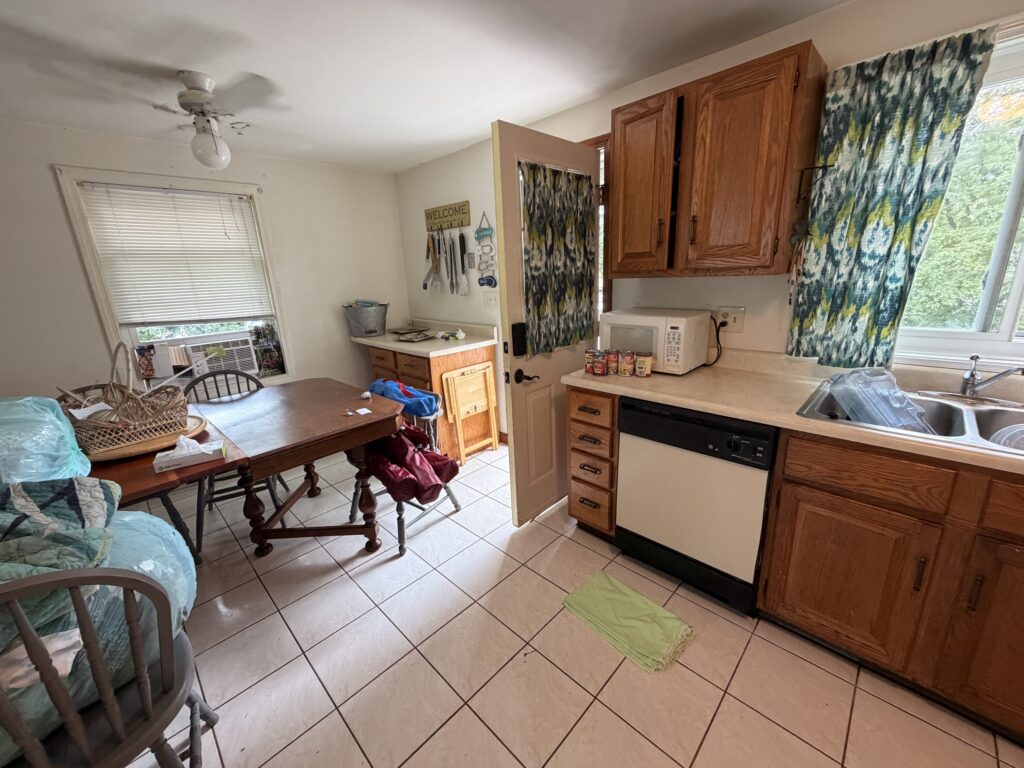
There were dated finishes and furnishings, personal items, older appliances and areas that simply didn’t feel cohesive or intentionally designed for guests.
Then there was the faucet.
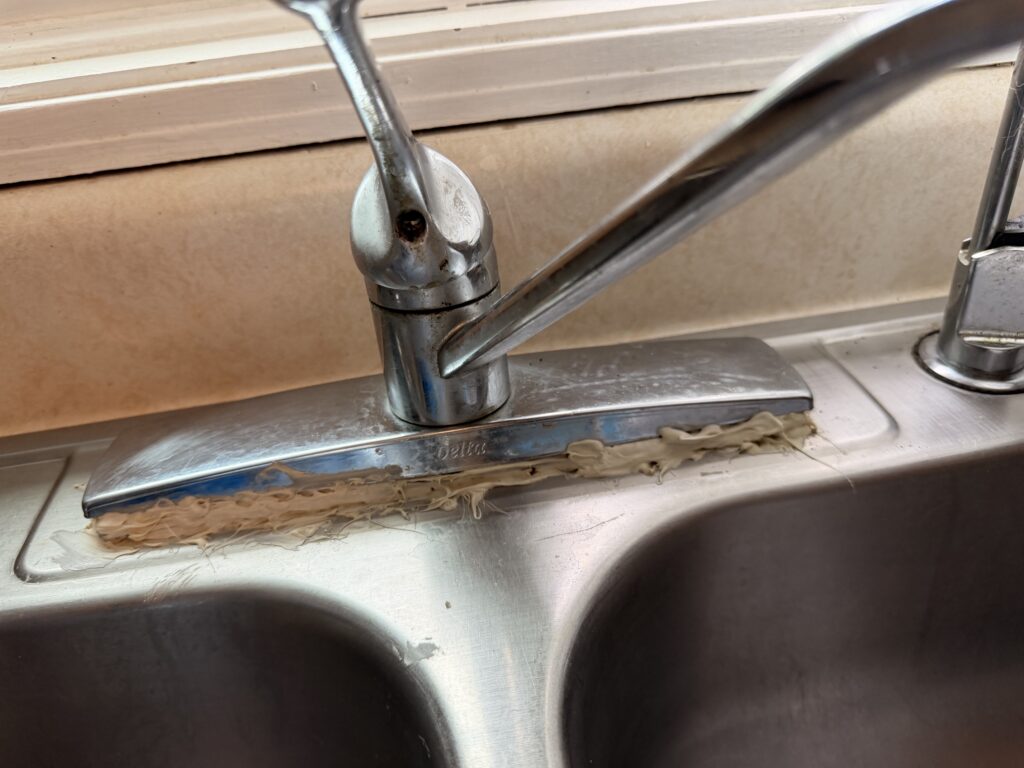
A large amount of sealant surrounded its base, like someone had made repeated attempts to fix a problem instead of properly repairing it.
This may sound like a small thing.
But this is exactly how my brain works when I’m evaluating a property.
If I see one repair like this, I start wondering:
What else has been patched instead of repaired?
Is something leaking?
Is there water damage underneath?
Does the faucet need to be replaced?
Are there plumbing issues I haven’t discovered yet?
A property manager has to look beyond what is visible because once guests arrive, those problems become our problems.
Then I Started Looking at the Bedrooms
A bed in a room doesn’t automatically make it a guest bedroom.
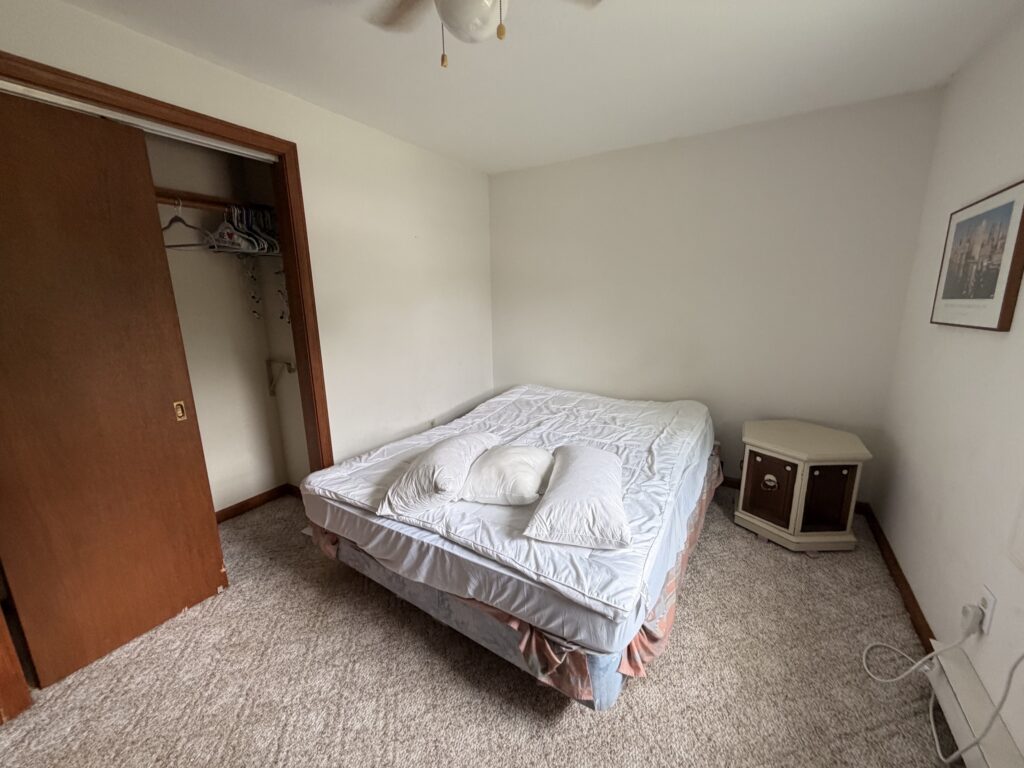
I look at the mattress.
The bed frame.
The linens.
The pillows.
Nightstands.
Lighting.
Electrical outlets.
Window coverings.
Storage.
Temperature control.
Whether two people can actually move comfortably around the bed.
And then I ask myself whether this room will photograph beautifully enough to make someone want to book it.
Some of the bedrooms in this particular property were extremely basic.
Beds and mattresses existed, but the rooms weren’t yet hospitality spaces.
They needed to be furnished and styled.
That doesn’t mean every bedroom needs expensive furniture.
It does mean everything should look intentional.
A comfortable mattress, attractive bedding, two pillows per guest, bedside lighting and a few well-chosen furnishings can completely change how a room feels.
Multiply that by several bedrooms, however, and the investment starts adding up quickly.
And Then There Was the Bathroom
Bathrooms are one of my biggest non-negotiables.
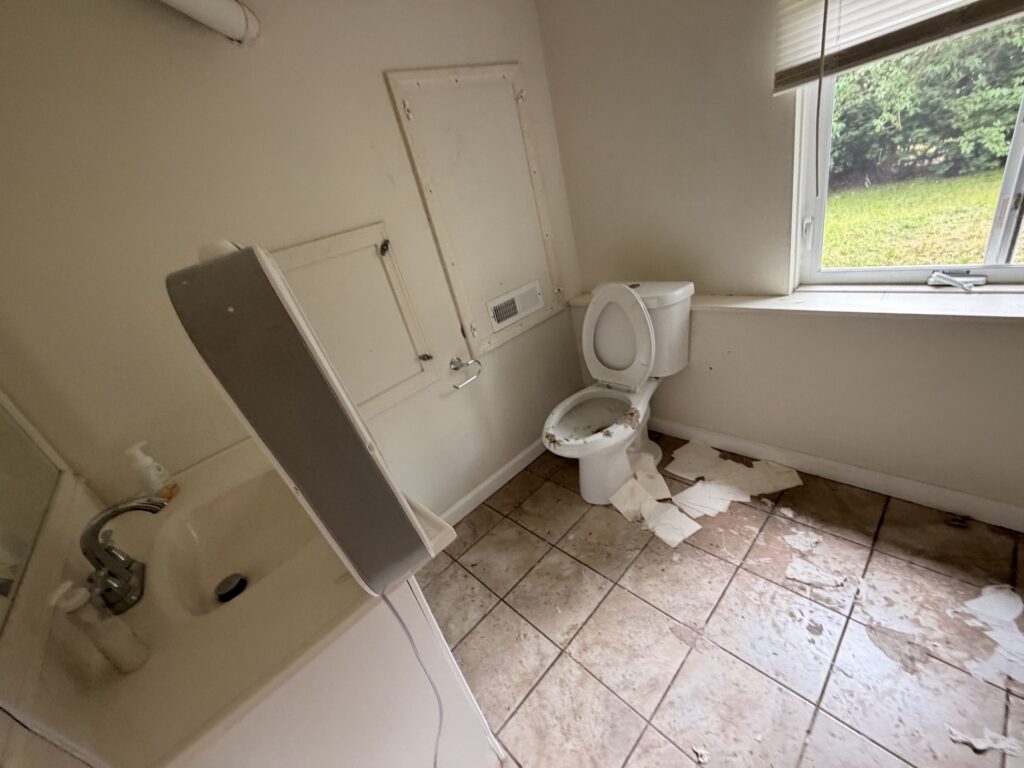
Guests need to feel that a bathroom is exceptionally clean.
Not “pretty clean.”
Not “it’s an older house.”
Clean.
I encountered a bathroom that clearly needed significantly more than staging.
The floor, fixtures and overall condition needed attention before I would ever be comfortable putting paying guests into the property.
And here’s something else I noticed.
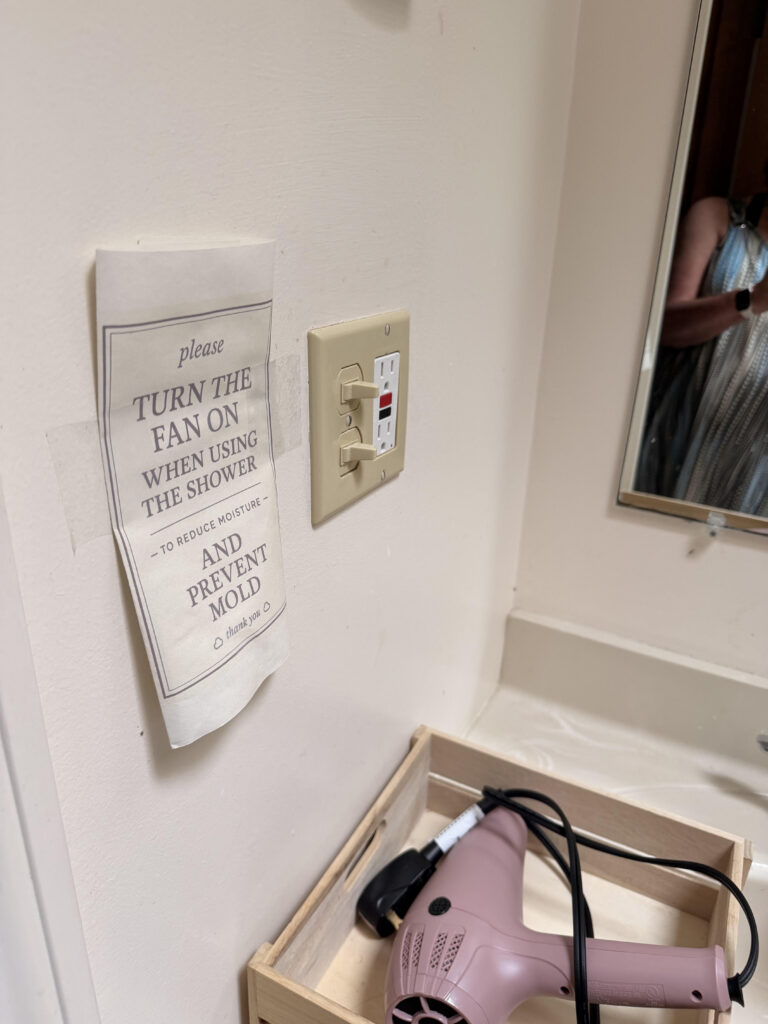
There was a homemade notice asking guests to turn on the bathroom fan to help prevent mold.
My first thought wasn’t, “That’s a helpful sign.”
My first thought was:
Why is mold prevention significant enough that someone felt they needed to tape a sign to the wall?
Is the ventilation inadequate?
Has there already been a moisture problem?
Does the exhaust fan work properly?
Has mold previously developed?
These are the questions I ask because simply telling guests to turn on a fan doesn’t necessarily resolve the underlying issue.
Then I Walked Outside
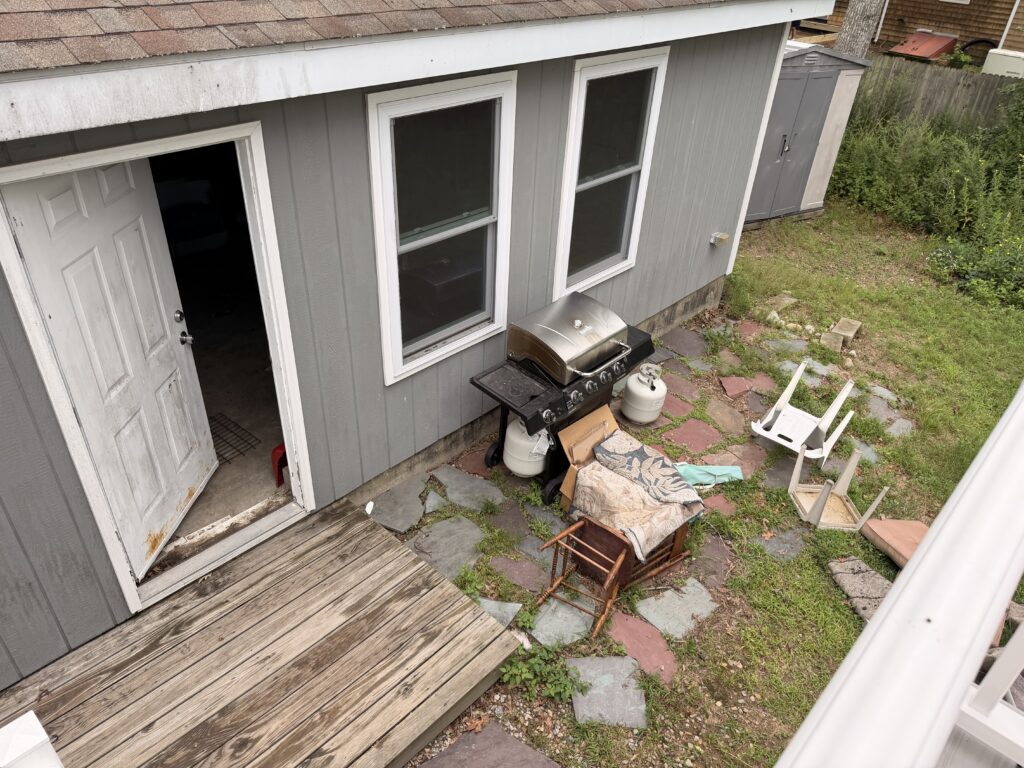
Outdoor space can be a huge selling point for a vacation rental.
But again, guests don’t automatically see “potential.”
They see what is actually there.
I saw miscellaneous furniture, propane tanks, weeds, uneven areas and items that would need to be cleaned up, removed, repaired or reorganized.
In my mind, I was already redesigning it.
Clean this out.
Pressure wash that.
Remove those pieces.
Create a defined seating area.
Add attractive outdoor furniture.
Improve the landscaping.
Make the entrance feel welcoming.
This is what happens when I walk through a property.
I’m not just cataloging problems.
I’m mentally building the finished product.
I Could See What This House Could Become
That’s what made this particular situation difficult.
There was absolutely potential here.
With the right investment, the house could become a very different property.
I could envision clean, coordinated bedrooms.
Fresh bedding.
Thoughtfully styled living spaces.
A welcoming outdoor area.
A properly equipped kitchen.
Bright, spotless bathrooms.
Professional photography.
A strong Airbnb listing.
A pricing strategy.
Guest messaging.
House rules.
Operations.
Cleaning systems.
And all the other pieces necessary to turn a house into a functioning hospitality business.
But then comes the part that property owners sometimes underestimate:
Someone has to pay to create that transformation.
So I Started Running the Numbers
After walking through the house, I began estimating what it would realistically cost to bring the property to the minimum level where I would feel comfortable managing and marketing it.
Not luxury.
Not a high-end renovation.
Just the minimum level I would want associated with my business and reputation.
I started mentally assigning numbers to categories.
- Beds and mattresses.
- Bedding.
- Furniture.
- Lighting.
- Bathroom improvements.
- Kitchen repairs.
- Cleaning.
- Painting and touch-ups.
- Landscaping.
- Outdoor furniture.
- Repairs.
- Décor.
- Window treatments.
- Safety equipment.
- Kitchen inventory.
- Guest supplies.
And the inevitable things that are discovered once work actually begins.
My preliminary estimate was approximately $12,000 to $20,000 in improvements, repairs, furnishings, and preparation.
That number could obviously move in either direction depending upon contractor estimates and what was discovered during the process.
Then there was another cost to consider.
My time.
Setting Up a Short-Term Rental Is Work
One of the biggest misconceptions about Airbnb property management is that a property manager simply creates a listing and answers messages.
A turnaround like this is an entirely different project.
Someone has to:
- Research products.
- Source furniture.
- Coordinate deliveries.
- Hire contractors.
- Meet workers.
- Schedule repairs.
- Choose bedding.
- Order kitchen supplies.
- Set up bedrooms.
- Create the guest experience.
- Establish safety standards.
- Stage the property.
- Build inventory.
- Develop house rules.
- Create the listing.
- Coordinate professional photography.
- Develop pricing.
And oversee dozens of small decisions that ultimately determine whether the finished property feels amateur or professional.
For a project of this size, I estimated approximately $3,000 for my professional setup, sourcing, coordination and launch work, depending upon the final scope.
And that’s when the real decision had to be made.
Was the Owner Prepared to Make the Investment?
This is where I have learned to be very careful.
I can see potential.
I can create the plan.
I can tell an owner exactly what I think needs to happen.
But I cannot want the success of the property more than the person who owns it.
If an owner isn’t financially prepared to make the necessary improvements, I have two choices.
I can lower my standards.
Or I can walk away.
I chose the second.
Why I Passed on a Property in a Great Location
Turning down a property in a desirable vacation market may sound counterintuitive for a property manager.
More properties mean more potential management income.
But I have no interest in building my business by taking on every property that comes along.
I want properties where I believe we can create an exceptional guest experience.
Because once I agree to manage something, my reputation becomes part of the equation.
Guests don’t separate every maintenance issue into neat categories.
They don’t necessarily think:
“This mattress was the owner’s decision.”
or:
“The property manager recommended replacing this, but the owner didn’t want to spend the money.”
They simply know whether they had a good stay.
And then they leave a review.
That is why I need an owner willing to partner in building a successful property.
It Takes Money to Make Money in Short-Term Rentals
There is an important distinction here.
I am not suggesting that every Airbnb needs a $50,000 renovation.
It doesn’t.
Some of my favorite properties are simple homes that were thoughtfully prepared and exceptionally well maintained.
But there is a minimum standard.
The property must be safe.
It must be clean.
The beds need to be comfortable.
The furnishings need to be appropriate.
Repairs need to be completed properly.
Guests need the basic amenities they reasonably expect.
And the house needs to feel like someone deliberately prepared it for them.
That requires an upfront investment.
A Great Location Cannot Overcome a Poor Experience
This house reinforced something I tell property owners regularly.
Location creates opportunity. Guest experience creates the business.
A fantastic location may bring someone to your listing.
Beautiful photographs may convince them to book.
But the actual condition of the property determines what happens next.
Do they leave five stars?
Do they recommend the property?
Do they return?
Or do they complain about the mattress, bathroom, cleanliness, furniture and maintenance?
The goal isn’t simply to get the first booking.
The goal is to create a sustainable short-term rental business.
What I Want Property Owners to Understand
If you contact me about managing or co-hosting your short-term rental, I’ll look at your property from two perspectives.
First, I’ll look at the business opportunity.
Can we market it?
Is there demand?
What could it potentially earn?
Then I am going to look at the guest experience.
Can I confidently stand behind this property?
If the answer to the first question is yes but the second answer is no, we have work to do before the property goes live.
And sometimes that means spending money before making money.
That’s not an obstacle to the business.
It’s part of entering the business.
Sometimes the Best Business Decision Is Saying No
Walking away from this opportunity wasn’t easy because I could see what the property could become.
I still believe the right owner, investment, and improvements could transform it into a successful vacation rental.
But until that investment is made, it isn’t a property I am willing to manage.
And I’m comfortable with that decision.
Because one of the most important things I can do as a property manager isn’t simply knowing which properties to take on.
It’s knowing which ones to turn down.
A property doesn’t have to be perfect before I work with an owner.
But the owner does have to be willing to do what it takes to make it excellent.